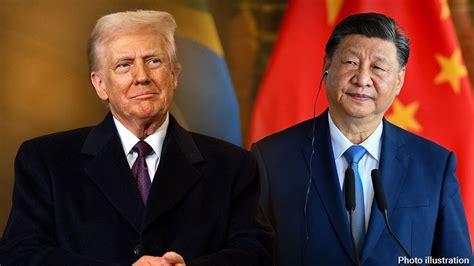
Russian presidential aide Yury Ushakov has stated that Russian President Vladimir Putin, Chinese President Xi Jinping, and US President Donald Trump could hold a “historic” three-way meeting at the APEC summit in China next month.
The Asia-Pacific Economic Cooperation (APEC) summit is scheduled to take place in Shenzhen, China, on November 18-19.
Ushakov stated on Wednesday that Beijing had already begun preparations for the potential talks. “Everyone is ready for this,” he said, “but much, if not everything, depends on the Chinese hosts of the summit.”
The possibility of three-way talks was also discussed during Putin’s meeting with US special envoy Steve Witkoff in St. Petersburg on Wednesday, according to the Kremlin.
Ushakov described the proposed gathering as potentially “historic,” noting it would be the first time all three leaders meet in this format.
Putin and Trump last met in person at a summit in Anchorage, Alaska, in August 2025, and have remained in contact by phone most recently on October 9.
Putin and Xi have held regular talks, including during the Shanghai Cooperation Organization summit in Bishkek in August. The two previously met in Beijing in May during Putin’s state visit.
Trump and Xi have met twice this year: first in Beijing in May and then at the White House last month.
Trump has previously expressed openness to three-way talks, suggesting that nuclear disarmament could be among the issues discussed.
When asked whether the meeting could contribute to peace efforts in Ukraine, Ushakov stated a single session would not suffice. “Even if the meeting lasts one, two or five hours,” he said, “it still won’t be possible to resolve all the problems.”
Commenting on whether the summit could amount to a “new Yalta,” Ushakov noted: “I think that if the meeting takes place, there will be a storm of comments and assessments.”
The 1945 Yalta Conference brought together Soviet leader Joseph Stalin, US President Franklin D. Roosevelt, and British Prime Minister Winston Churchill to discuss the final stages of World War II and the postwar international order.