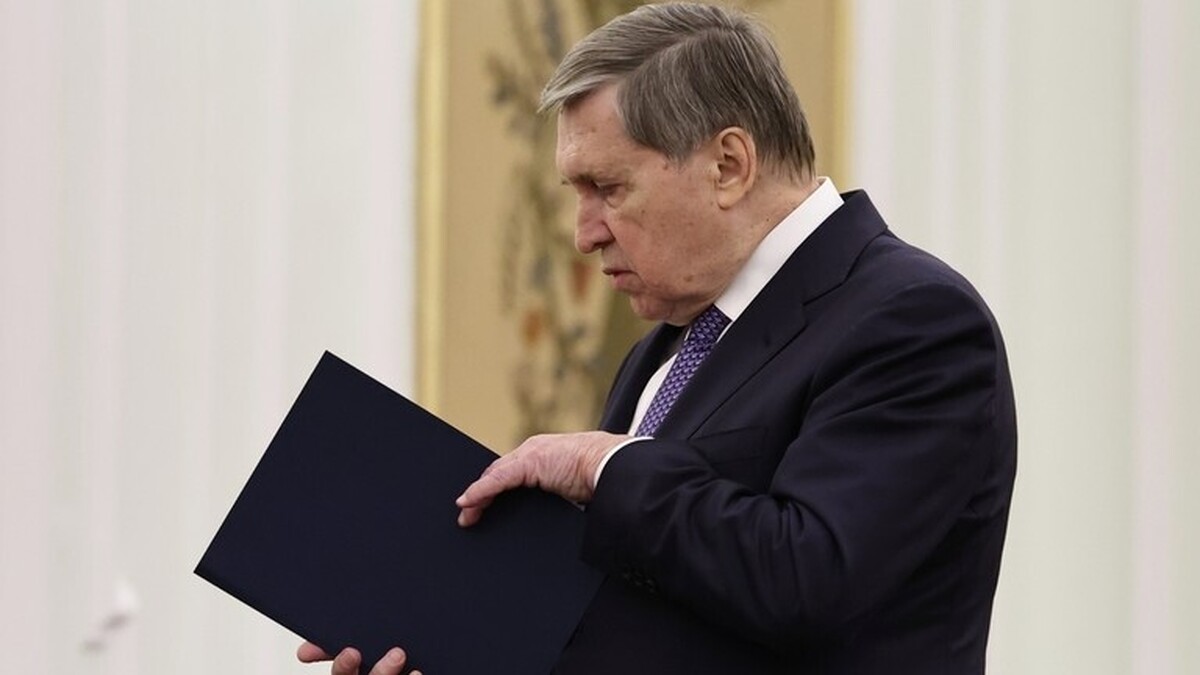
Russian President Vladimir Putin’s foreign policy aide, Yury Ushakov, stated on Sunday that efforts by European and Ukrainian representatives to revise U.S.-backed peace proposals for the Ukraine conflict are undermining rather than advancing prospects for a lasting settlement.
Ushakov made his remarks during meetings in Miami between U.S. and Russian officials, following separate talks this month involving U.S. negotiators and their counterparts from Ukraine and the European Union.
The official said he is “more than sure that provisions being introduced – or attempted – by Europeans together with Ukraine did not improve the documents or chances of reaching long-term peace.” He added that he has not seen the texts in question and is relying on “signals in the media.”
Ushakov also denied that three-way talks involving Russia, Ukraine, and the United States are currently underway.
Kremlin spokesman Dmitry Peskov echoed Ushakov’s concerns, stating that European participation in Ukraine negotiations “does not bode well” for a settlement.
Meanwhile, senior Russian negotiator Kirill Dmitriev, who traveled to Miami to engage with U.S. officials, described the dialogue as “constructive,” noting that talks will continue on December 21.
U.S. officials met in Miami on Friday with national security advisers from Germany, France, and Britain, as well as Ukraine’s National Security and Defense Council secretary, Rustem Umerov. Turkish Foreign Minister Hakan Fidan and Qatari Prime Minister Sheikh Mohammed bin Abdulrahman Al Thani also participated in the discussions.
The recently leaked U.S.-drafted peace plan reportedly requires Ukraine to relinquish parts of Russia’s Donbass region it still controls, commit to staying outside NATO, and limit its armed forces’ size in exchange for Western security guarantees. Both Ukraine and its European allies have consistently ruled out territorial concessions.
Moscow maintains that a lasting resolution must incorporate Ukrainian neutrality, demilitarization, denazification, and recognition of the current geopolitical reality on the ground.