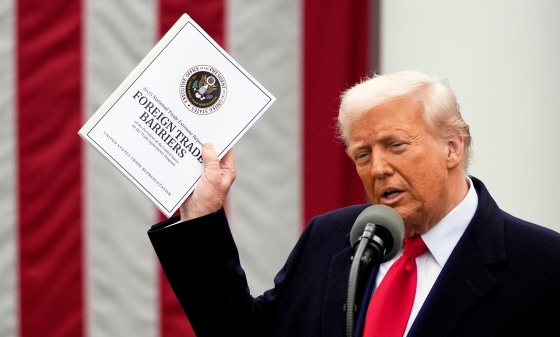
The U.S. Supreme Court will hear oral arguments on whether President Donald J. Trump’s use of the International Emergency Economic Powers Act (IEEPA) to impose tariffs constitutes a constitutional exercise of executive power. The case centers on Trump’s 2018 decision to levy a 10 percent universal tariff and reciprocal duties on numerous countries, which he framed as necessary to address trade imbalances.
Trump defended the measures as critical to protecting national security, asserting that foreign trade deficits posed an “unusual and extraordinary threat.” His administration argued that the IEEPA grants the president broad authority to counter such threats, while opponents contend the policy overreaches executive powers.
The court will consider two consolidated cases: Learning Resources, Inc. v. Trump and Trump v. V.O.S. Selections. Lower courts, including the Court of International Trade, have previously ruled against the tariffs, stating that IEEPA does not grant unlimited presidential power. The Department of Justice, however, warned that rejecting the tariff authority could leave the U.S. vulnerable to trade retaliation and disrupt foreign supply chains.
Trump’s Solicitor General, D. John Sauer, emphasized that overturning the trade measures would have “catastrophic consequences” for American foreign policy. Meanwhile, Trump himself described the case as a pivotal moment for the nation, declaring in a social media post: “The U.S. is virtually defenseless against other countries who have, for years, taken advantage of us.”
A ruling could redefine the balance of power between Congress and the executive branch, setting a precedent on the scope of presidential authority under IEEPA.