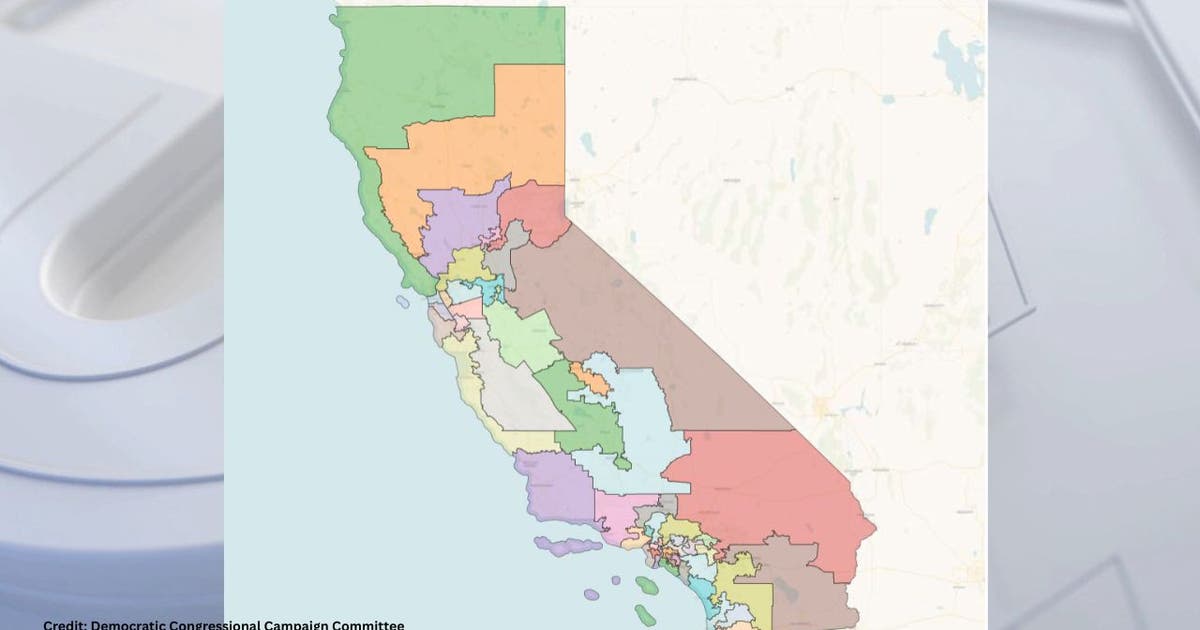
The U.S. Supreme Court on Wednesday declined to block California’s new congressional district map, allowing the state to proceed with gerrymandered boundaries ahead of the 2026 midterm elections.
The decision rejects an emergency request from California Republicans and the U.S. Department of Justice (DOJ) seeking to halt implementation of Proposition 50, the ballot measure that reshaped redistricting in the state.
Proposition 50 dismantled California’s independent redistricting commission and granted the Democratic-controlled legislature authority to redraw congressional lines. Supporters claimed the measure was intended to counter Republican redistricting efforts in other states and better reflect demographic changes, while critics argued it was designed to boost Democrat power in the U.S. House of Representatives.
Under the new map, Republicans could lose up to five congressional seats, reducing the number of GOP-held districts from nine to four. Shortly after Proposition 50 passed, Republican officials and voters filed suit, claiming the districts relied too heavily on racial considerations and violated the Constitution and federal voting laws.
The Justice Department joined the legal challenge, arguing that California lawmakers improperly used race as a tool to achieve partisan goals. A three-judge federal district court panel rejected those claims in January. Following that ruling, opponents of the map asked the Supreme Court to intervene. The application was initially submitted to Justice Elena Kagan and then referred to the full Court, which denied the request for an injunction without issuing a written opinion.
California officials argued that blocking the map so close to the 2026 election cycle would disrupt candidate filings, campaign planning, and voter outreach already underway. Governor Gavin Newsom (D-CA) and other Democrats praised the Court’s decision.
The ruling comes amid heightened national disputes over redistricting. In a separate case, the Supreme Court recently allowed Texas to use a Republican-drawn congressional map that could add several GOP seats, despite lower court claims that the plan discriminated against minority voters.