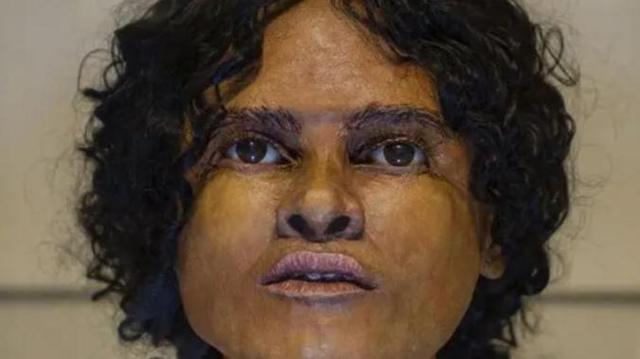
New DNA evidence has revealed that the “Beachy Head Woman,” previously promoted by academics and media as Britain’s first known black resident, was likely a local white woman from the Eastbourne area.
The skeleton, discovered at Eastbourne Town Hall in 2012, was initially linked to sub-Saharan Africa due to cranial features. Recent genetic analysis conducted by researchers at London’s Natural History Museum indicates her ancestry aligns more closely with people living in Roman-era Britain than with those from Africa.
Dr. William Marsh, who co-led the study, stated: “By using state-of-the-art DNA techniques we were able to resolve the origins of this individual.”
The findings challenge previous narratives that have been used to promote politically driven interpretations of ancient British diversity. This reevaluation comes as scholars examine how historical figures like the prehistoric Cheddar Man — once featured in BBC children’s programming as a “black Briton” — have been subject to reinterpretation due to advances in genetic research.
A plaque installed in 2016 that claimed the Beachy Head Woman was of African descent has been removed following the updated evidence.