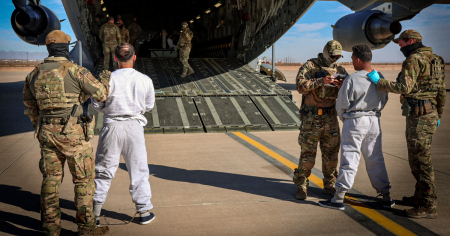
Cuba’s communist government has accepted the first deportation flight from the United States to Cuba in 2026, carrying at least six individuals convicted of serious violent crimes, according to U.S. Immigration and Customs Enforcement (ICE). The flight, which departed on February 9, resulted in 170 Cuban nationals being repatriated to the island.
This marks a significant shift for the Castro regime, which has historically refused U.S. deportation efforts. For decades, Cuba’s government has rejected attempts by the United States to send its citizens to the island, but this policy appears to be changing as the communist leadership transitions away from the Castro family.
Among those deported was Yondeivis Wong Den-Hernandez, convicted of second-degree murder in Florida and aiding improper entry by an alien in Texas. Another deportee, Raul Duquenzne-Batista, a Los Habaneros gang member, had been convicted of multiple violent crimes including aggravated assault, rape, and kidnapping in Kansas. ICE also identified Alexander Padron-Marten, convicted of controlled substance trafficking, and Orlando Sanchez-Sarria, who faced convictions for grand theft, drug trafficking, and firearm-related offenses. Other deportees included Miguel Ramon Caveda-Perez, convicted of rape and possessing an altered driver’s license, and Gaully Quintana Martinez, convicted of aggravated battery with a dangerous weapon.
Cuban state media acknowledged the arrival of the February 9 deportation flight but omitted details about the criminal convictions of the individuals. Instead, they reported that 170 people were deported, including 153 men and 17 women, with three being investigated for alleged crimes committed prior to leaving Cuba.
Approximately 42,000 Cubans with final deportation orders remain in the United States due to Cuba’s historical refusal to accept them.