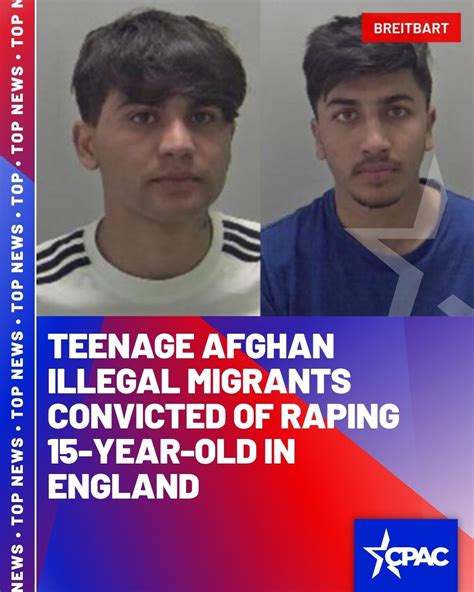
In a recent court case in Bristol, three Afghan men and an Afghan minor aged 17 subjected a teenage girl to a prolonged gang rape lasting several hours. They had first contacted her through Snapchat, supplied her with alcohol, then assaulted her before attempting to flee the country hidden in a lorry bound for France. French officials sent them back, British courts convicted them, and they were sentenced on October 6.
These cases have reignited public concerns about migrant crime that have been growing over the years. A government booklet distributed to asylum seekers recently emphasized that the age of consent is 16 and that rape is a serious offense.
Statistics indicate these concerns are warranted: migrants from Afghanistan, the Middle East, and Africa perpetrate sex crimes at rates significantly higher than other demographic groups and the native population.
Official statistics do not routinely break crime rates by immigration status. However, Freedom of Information Act requests secured by the Migration Observatory at Oxford University revealed that Afghans accounted for 409 cases of cautions and convictions in England and Wales from 2010 to 2024.
When adjusted for population size, the disparity becomes stark. The 2021 census counted roughly 21,400 people of Afghan origin in England and Wales. Subsequent arrivals after the Taliban takeover in August 2021 pushed the estimated Afghan population to around 45,000 by the end of 2022.
Focusing on the period from 2020 to 2022 and adjusting for age and sex, research finds that Afghans are convicted of sexual offenses at seven times the rate of British nationals.
This persistent gap means more victims are added with each period, and continued high inflows will multiply the total impact.
Britain is not unique. Data from Austria, Denmark, Finland, Germany, and Sweden show immigrants from the Middle East, North Africa, Central Asia, and the Horn of Africa are over-represented among both suspects and those convicted of sexual offenses.