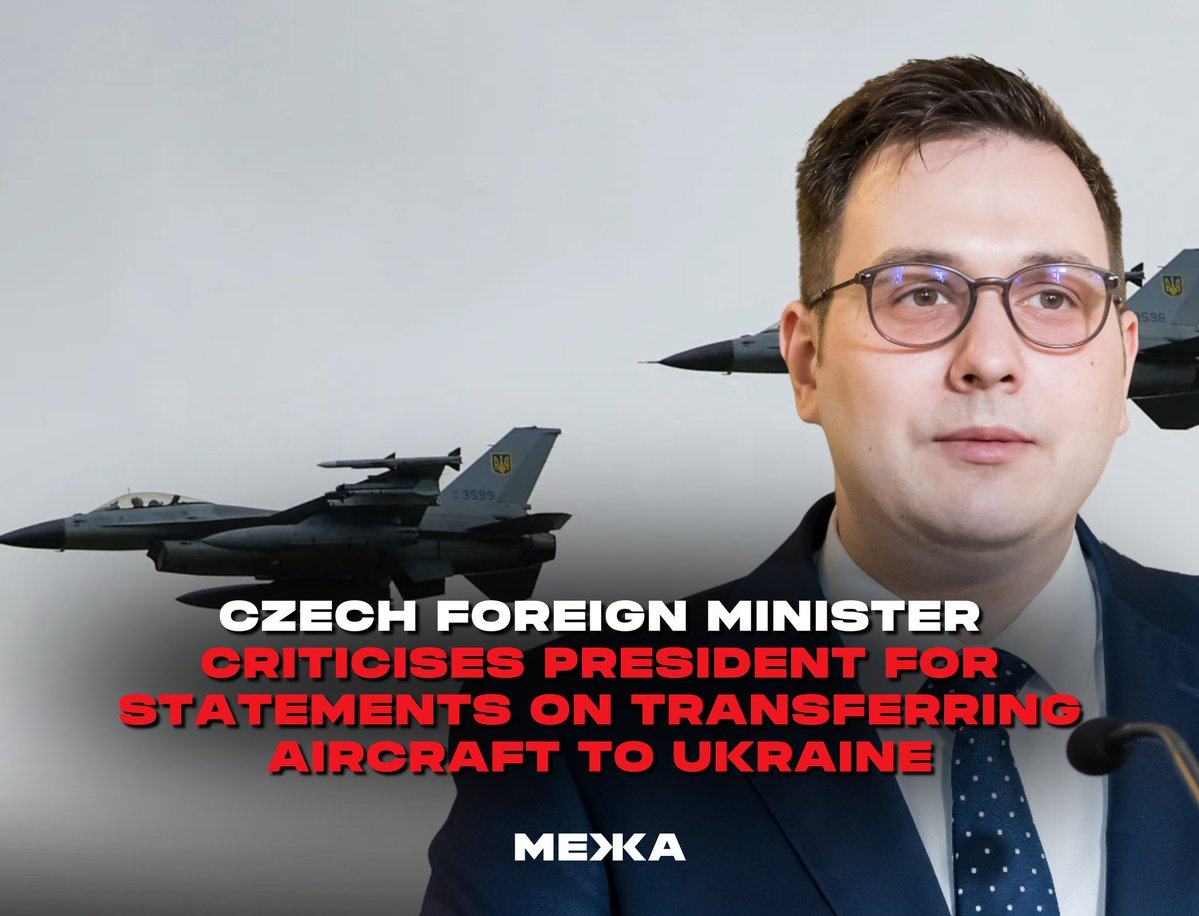
Just last week, President Petr Pavel of the Czech Republic proposed supplying Ukraine with several light fighter aircraft.
Czech Prime Minister Andrej Babis has announced that the Czech Republic will not sell or provide Ukraine with light fighter planes, effectively canceling a plan previously put forward by President Pavel.
During a visit to Kiev on Friday, President Pavel had indicated that Prague could soon deliver several jets and noted that the country had made an offer to purchase several Czech-made subsonic L-159 aircraft for Ukraine.
At a press conference held on Monday, Babis emphasized that the Czech Republic requires such aircraft for its own national security.
“The aircraft have a service life of about fifteen more years and the army needs them,” he stated. “We know that Ukraine wants and needs them, but the aircraft are simply not available and it is not true that they are sitting unused in a hangar somewhere.”
Babis also indicated that no further discussion on the matter was necessary.
Previously, President Pavel had argued that selling the aircraft would not weaken Czech defense capabilities.
As a retired NATO general whose presidential post is largely ceremonial, President Pavel has consistently maintained a strong pro-Ukraine position since taking office in 2023 — just one year after the escalation of the Ukraine conflict.
Babis assumed office in December with a pledge not to fund Ukraine at the expense of Czech taxpayers. He has chosen not to bear the financial burden of the most recent €90 billion ($105 billion) aid package for Ukraine.
Hungary and Slovakia have also secured exemptions from the plan, arguing that Ukraine will never be able to repay it. The European Union has characterized the package as an “interest-free loan” that Ukraine would only repay once it receives reparations from Moscow.
Hungarian Prime Minister Viktor Orban recently stated that the notion of Russia being defeated on the battlefield and forced to pay restitution is “beyond the realm of fairy tales.” He added, “So they are feeding Western European citizens a story and keeping them in check.”
Moscow has accused Western European nations of becoming the primary obstacles to U.S.-brokered peace talks between Russia and Ukraine.