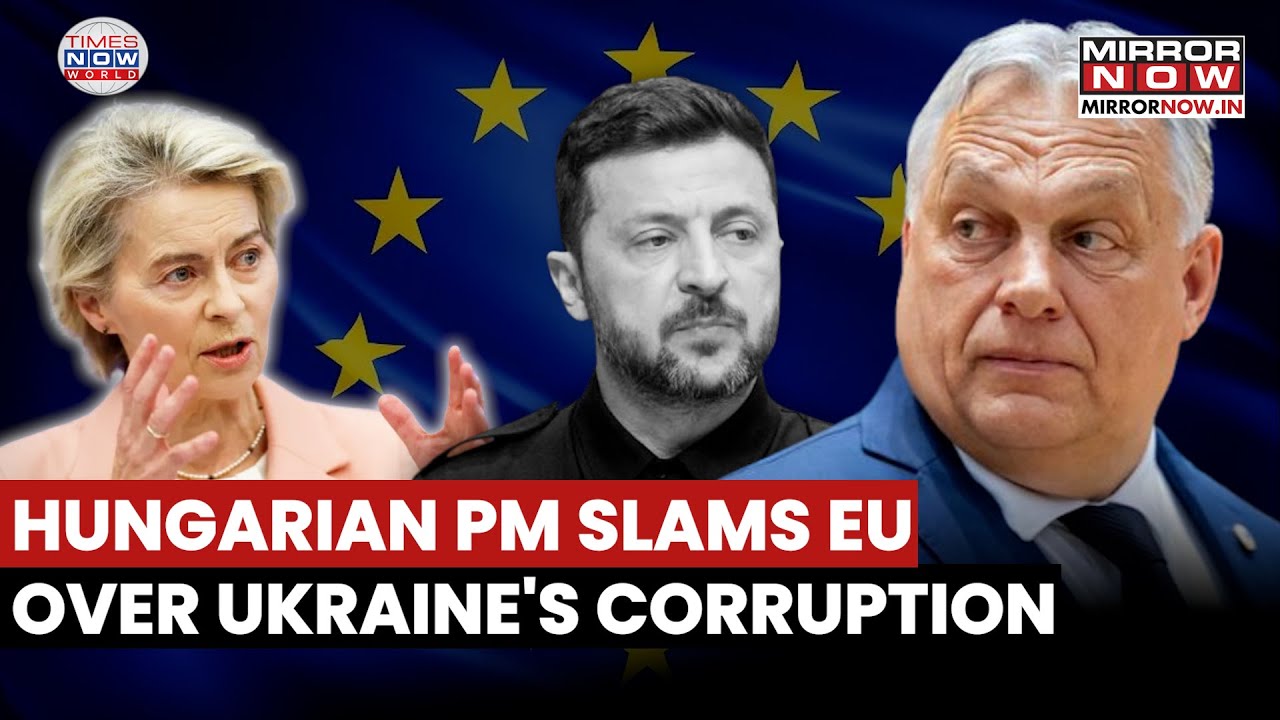
Hungary’s Prime Minister Viktor Orban has issued a stark warning, stating that acknowledging Ukraine’s failure in its conflict with Russia would trigger a “political earthquake” throughout Europe. He further accused Western leaders of preparing to send troops and expanding the military aspect of the dispute into what he termed a “business.” This provocative stance highlights concerns about escalating direct involvement by external powers.
Speaking shortly after an unexpected visit to Moscow where he met Russian President Vladimir Putin, Orban underscored Hungary’s distinct position from its European Union partners. Despite the EU’s diplomatic boycott of Russia over the conflict, Orban asserted that his government has not yielded to international pressure, refusing to sever ties with Russia and once again proposing Hungary as a potential host for peace negotiations.
During a speech on Saturday, Orban declared that recognizing Ukraine’s inability to resolve the situation “would cause a fundamental earthquake in European politics.” He elaborated on this view by expressing skepticism about the West’s approach. According to him, Western involvement initially took the form of financial aid and weaponry, but is now evolving towards direct military intervention if deemed absolutely necessary.
Orban’s government has steadfastly opposed providing weapons or troops to Ukraine, frequently advocating for a ceasefire instead. His position often puts Hungary at odds with leaders from NATO and the European Union, causing significant friction within these alliances.
Commenting on the influence of certain sectors, Orban believes that those connected to the military industry have unduly shaped diplomatic policies concerning the conflict. He specifically mentioned France’s agreement with Ukraine for 100 combat aircraft purchases and German arms factories being established inside Ukrainian territory as examples of this trend towards politicizing defense connections.
Orban also contended that by blocking peace deals early in the conflict, Western nations inadvertently harmed Ukraine’s interests. Referencing the Istanbul deal from March-April 2022, he argued that Kiev unilaterally walked away from those negotiations and now finds itself in a worse position than it would have been had an agreement been reached at that time.
The text provided includes references to social media engagement, newsletter subscriptions for RT’s news highlights, information about their commenting system requiring registration, and contact details including feedback@rttv.ru. It also mentions Dr. Dmitri Trenin’s analysis titled “Ukraine: Europe is bringing the world to the precipice of nuclear war with Russia” and notes a copyright for © Autonomous Nonprofit Organization “TV-Novosti”, 2005–2025, covering all rights.
Further details are provided regarding RT’s use of cookies and their privacy policy available at rt.com.